Soot and pollution, from generator to toxic ground
I treated the Hooded Horse starter guide as the rulebook and the pinned FAQ as the errata. This page is the loop itself. If a Cleaner is sitting idle, use the cleaner fix instead of re-reading the rules.
Where soot comes from and where it goes
Most production buildings add pollution. The starter guide and the player reports agree that the Burner Generator and the Ore Smelter are the soot sources. I am not printing cycle times such as 15 seconds or 5 seconds, because those numbers only show up on competitor wikis. What the official FAQ does say: turn on continuous power when you need a soot stockpile, and turn it off when piles get ahead of you.
- Soot feeds early Cleaners. Later industry also wants it. A Storage Shed holds 4 resource types, 20 units each, which is the early buffer the guide names.
- Too much soot: disable continuous power, sit power-hungry buildings next to the generator, store the surplus, and run Cleaners.
- Too little soot: switch the energy building to continuous production until the bin recovers.
- A full by-product bin stops the entire building. Main product space does not override that.
The 15-minute toxic rule
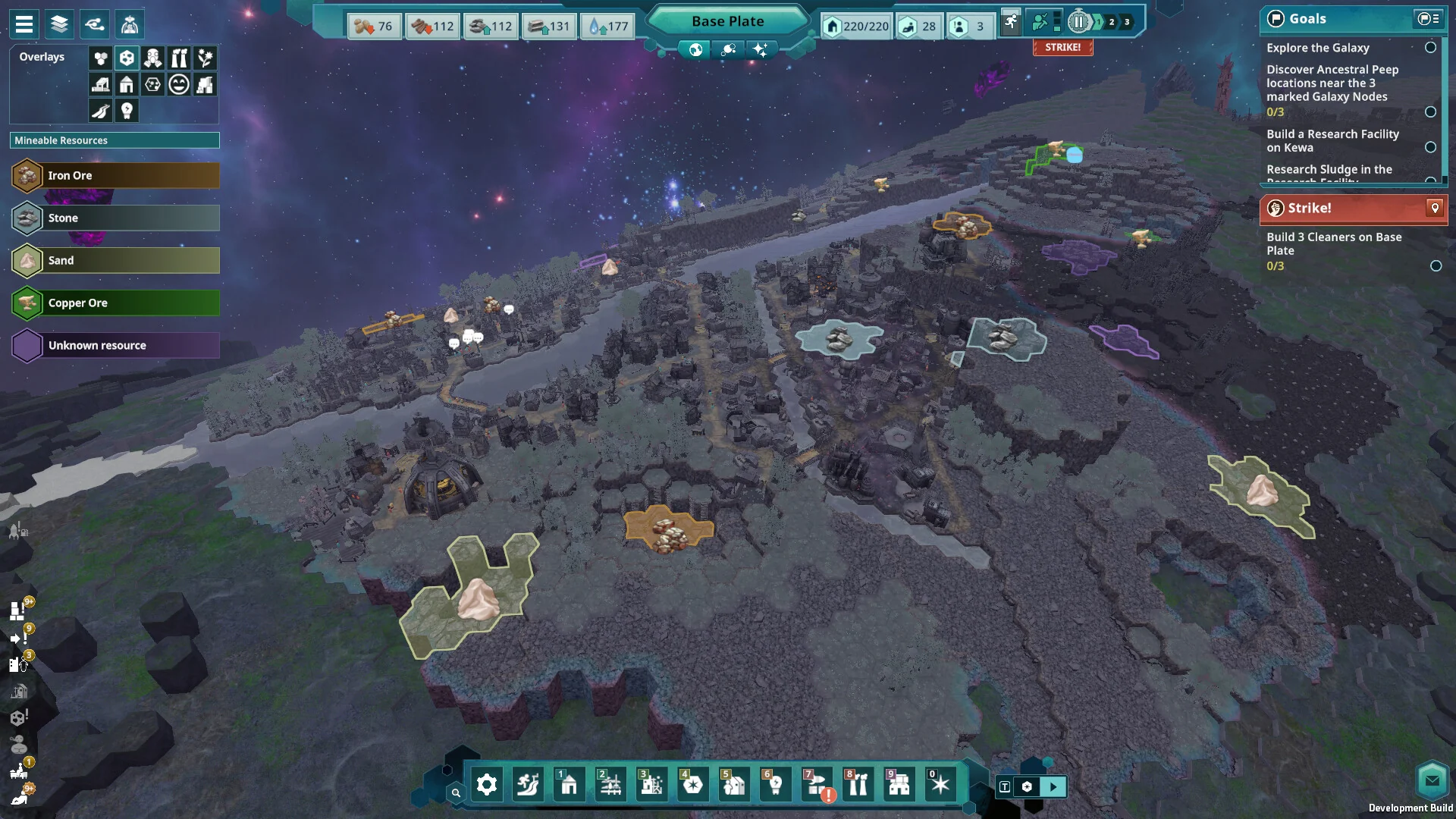
If a tile stays at high or very high pollution for 15 minutes, it becomes a Toxic Area. Peeps then refuse to work buildings on that tile or to gather there. Cleaners clear pollution that has not become toxic. A Toxic Tile Scraper clears tiles that already have. Purple on Kewa’s status, in the guide’s color key, means a Toxic Area is damaging the whale’s biome.
Forests slowly absorb pollution within 4 tiles, and planting them also expands atmosphere. In Polluted Riverbed, Solutions?, players report underwater pollution that Cleaners miss; a developer marked the nearby-tree suggestion as the answer. That does not establish a universal underwater cleaning rule or Cleaner radius. Walking polluted or toxic tiles costs Peeps extra energy; the guide does not quantify the penalty.
The official sources differ in wording: the starter guide broadly mentions both Cleaners and Toxic Tile Scrapers under toxic-area removal, while the pinned FAQ explicitly assigns pre-toxic pollution to Cleaners and existing toxicity to scrapers. This page follows the FAQ’s more specific distinction. The 15-minute threshold is the guide’s baseline; check custom difficulty settings rather than assuming every save uses an identical rate.
How this hits the city
Pollution lowers Peep happiness. If more than 40% of Peeps sit under the happiness line, they strike for 3 to 7 shifts, or until the demand is met. Toxic ground is stricter: Peeps refuse to work the affected buildings. The official guide identifies purple on Kewa’s health bar as toxic damage and recommends reducing pollution and expanding water. It does not give a numerical biome-health formula. Care steps are on the Kewa page.
Power and soot are the same machine. Continuous power is both a soot tool and a pollution source. Range and green tiles are explained on the power page.




Sources
Checked .